Why do some thimbles have holes?
The holes in the thimble’s indentations let moisture escape, permitting the evaporation of sweat. While you may not be visibly sweating, a solid thimble can hold in enough moisture to make your thumb look as pruney as it would after an hour in a bath tub.
What are Thimblettes used for?
Thimblettes (also known as rubber finger, rubber thimbles and finger cones) are soft thimbles, made predominately of rubber, used primarily for leafing through or counting documents, bank notes, tickets, or forms. They also protect against paper cuts as a secondary function.
Why is a thimble called a thimble?
England’s first thimble was made by a Dutch metal worker named Lofting in 1695. Lofting called it the “thumb-bell.” It was given this name quite obviously because it was shaped like a bell and worn on the thumb when in use. Over the years, the shape changed and the name was softened to ‟thimble.”
Can you put a thimble on your thumb?
If you are right-handed, you will wear the thimble on your right hand. If you are left-handed, the thimble goes on your left hand. The thimble is most commonly worn on the middle finger. However, some people prefer to wear a thimble on their pointer finger and sometimes the thumb.
What is a stitch finger?
The stitch finger is found on the front edge of the serger pressure foot. The finger functions as a meeting point for the threads that move through the serger, guiding each to create the stitch on the edge of the fabric.
What do you need to know about thimbles?
Thimbles 1 Introduction. A thimble is an object used to protect the finger and push the needle through the fabric or leather when sewing. 2 PAS object type (s) to be used. 3 Terms to use in the description. 4 Taking the dimensions. 5 Roman thimbles. 6 Ring-type thimbles. 7 Domed thimbles. 8 Palm guards. …
What’s the difference between domed and open thimbles?
The main division in thimbles is between the open, ring type and the domed, closed type. Domed thimbles can have a small hole in the top.
Why are thimbles made with irregular pattern of dimples?
A thimble with an irregular pattern of dimples was likely made before the 1850s. Another consequence of the mechanization of thimble production is that the shape and the thickness of the metal changed. Early thimbles tend to be quite thick and to have a pronounced dome on the top. The metal on later ones is thinner and the top is flatter.
What are the parts of a ring thimble?
A ring-type thimble will have a lower rim and an upper rim. The parts of a thimble (from left, IOW-F9CD4E, WMID-A9590D and NLM-FE8BD9 ). The sides may be straight or curved, but will usually taper towards the top. The sides will be covered with indentations, and the size, shape and layout of these should be carefully described.
How big of a hole do you need for thimbles?
It’s probably an issue with the finish adding a bit of material to the hole, because there is not much wood that needs to be removed. As I mentioned on my JM build thread, I read on another forum that a 3/8″ drill bit will create a perfect size hole to accept the thimbles, so i decided to try something.
What happens if you put a thimble in a chimney?
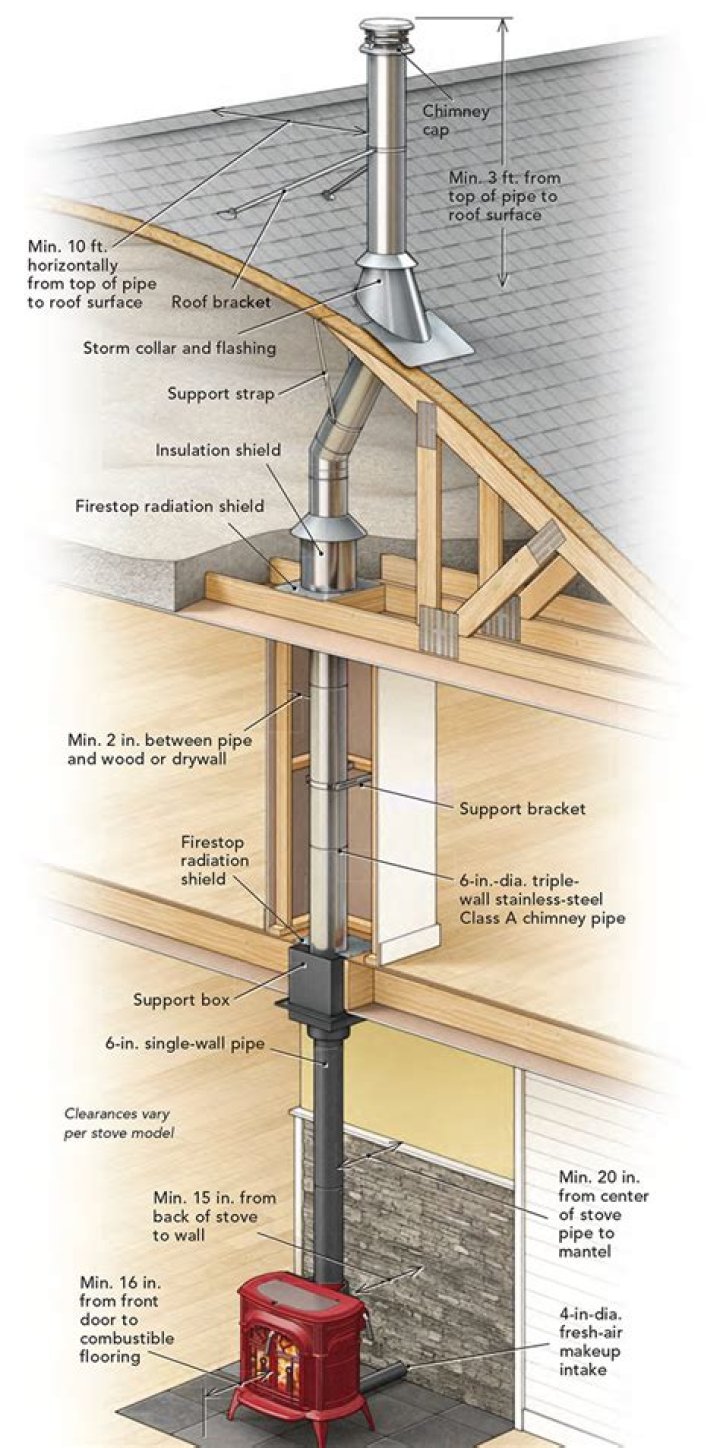
Unused thimble holes in chimneys are as dangerous as any breach in the chimney’s structure. Removing a previously existing stovepipe allows creosote to collect in the thimble that eventually ignites and spreads to the surrounds studs. It not only leaks dangerous flue gasses, but also allows smoke and flames into the house.
Thimbles 1 Introduction. A thimble is an object used to protect the finger and push the needle through the fabric or leather when sewing. 2 PAS object type (s) to be used. 3 Terms to use in the description. 4 Taking the dimensions. 5 Roman thimbles. 6 Ring-type thimbles. 7 Domed thimbles. 8 Palm guards.
The main division in thimbles is between the open, ring type and the domed, closed type. Domed thimbles can have a small hole in the top.